
Over the weekend, I was sitting with a few friends who are current educators. As someone who has worked in education for the last decade but not as a classroom teacher something clicked for me.
In talking about their experiences, I realized what teachers have known all along: the best way to support learning is to meet students where they are. It seems kind of obvious right?
It’s such a simple idea, yet profoundly powerful. And it doesn’t just apply to K–12 students it has much further reaching implications, like how we prepare future educators, too.
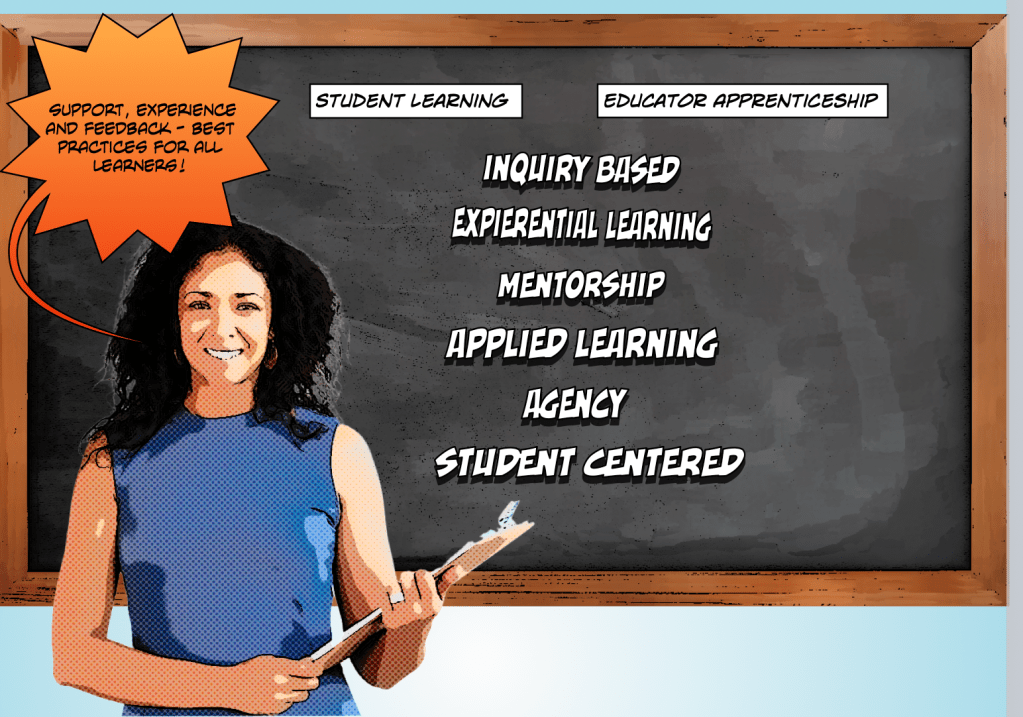
This “aha” feels especially urgent now, as we witness the thinking around the ways we prepare future educators start to shift. There’s growing momentum behind immersive programs like residencies and apprenticeships as sustainable, high-quality ways to staff our future classrooms. These models recognize that all learners, including aspiring educators, have different needs–whether they’re career changers, high school students, aspiring leaders or teacher assistants. Programs must reflect the complexity (from flexible entry points, to needing an income, or wraparound services) and meet candidates where they are, offering them what they need.
Take New York City, for example. As the city takes steps to implement the class size law capping classes at 20 students in kindergarten through third grade, 23 in grades 4–8, and 25 in high school the mayor has committed additional funding to support this effort. It’s estimated that this investment could fund the hiring of up to 3,700 new teachers. This presents a tremendous opportunity but it also raises a critical question: how will we prepare, support, and sustain this next wave of educators, especially as the city is faced with numerous vacancies and a persistent challenge with teacher recruitment and retention?
Apprenticeship pathways could be part of the solution. For teachers these models are typically built on residency programs and offer paid, mentored, on-the-job experiences aligned with related instruction creating multiple, accessible entry points into the teaching profession. By expanding how people can enter the field, we expand who is able to pursue it.
Carolyn Cleaveland, COO of Kennedy Children’s Center (KCC), captured this perfectly when speaking about their early childhood apprenticeship program:
“It’s not a shortage of people—it’s a shortage of opportunity.”
At KCC, they are fully staffed and there’s a waiting list of community members eager to become educators through their program. Fully staffed? A waiting list? for an early childhood program that’s almost unheard of. And it’s a powerful proof point of what’s possible when we remove systemic barriers and build pathways that reflect the lived realities of future educators.
Registered Apprenticeships in New York State are doing just that: opening doors to a broader pool of future educators by meeting people where they are and embedding career pathways that lead to lasting success.
But how exactly do these programs expand access to the profession?
By creating multiple, flexible entry points tailored to the realities of aspiring educators, apprenticeships tap into talent that traditional pathways do not accommodate for;
- Teaching Assistants to Teachers: Current TAs and paraprofessionals can work, in some new residency programs, toward teaching certification through paid, mentored experiences that align with their instructional responsibilities, advancing without stepping away from the classroom.
- Career Changers: Individuals from other industries bring valuable skills and lived experience. Apprenticeships offer a pathway into teaching without requiring them to leave the workforce to return to school full-time.
- Substitute Teachers: Already in schools and familiar with classroom dynamics, substitutes can enter into apprenticeships working alongside an experienced teacher offering a paid, structured, supported pathway to initial certification.
- Parents, Community Members, and/or Volunteers: Local residents deeply invested in the community, bring care, context, and commitment, making them strong candidates for supported entry through apprenticeships into the profession. They can grow into educator roles (such as teacher assistants or teachers) being supported by the school community, strengthening community-connected teaching.
- High School Students: Through CTE or CTE-like pathways, students can begin a career in education early, starting a teacher assistant apprenticeship and moving into a full time paid TA roles after graduation. This two year program will allow them to progress steadily in a paid position while taking coursework. And this is just the start. For those interested, they could build on this experience and continue by pursuing a teacher apprenticeship.
- Teachers to Leaders: experienced teachers interested in expanding their role within the school community could develop in leadership through an apprenticeship also. School administrators, like all educators, benefit from a paid, fully immersive program which allows them to apply their academic learning.
Each of these entry points broadens the pipeline into the profession, and helps meet the urgent demand for educators. This is more than a workforce strategy. It’s a commitment to sustainability, and the future of our schools.

 It's a Rap
Leave a comment