It's a Rap

creating partnerships to develop a dynamic, robust, well-prepared educator workforce


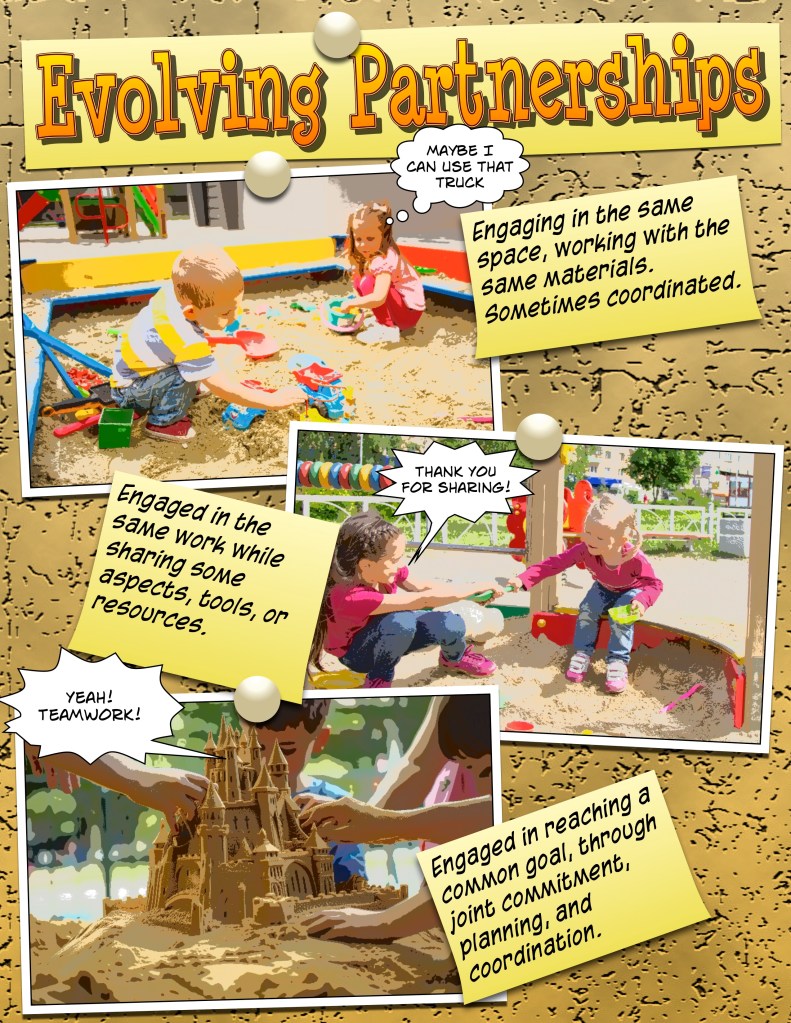
  • The Evolution of Partnerships: Building the Educator Workforce Through Collaboration

    Registered Educator Apprenticeships without strong partnerships are like a car with flat tires — you might move, but it’s going to be a bumpy ride! It’s the partnership conversations that keep things rolling smoothly and preparing future educators to get behind the wheel. What’s most exciting is how these collaborations break down barriers, build bridges, and dismantle the silos, creating a district-led approach that fully supports both aspiring teachers and the communities they serve.

    So, who are the key players that make Registered Apprenticeship Programs (RAPs) for educators actually work? You already know the Department of Labor and the Department of Education as they create the framework, but the real magic happens through a team on the ground. These folks don’t just check boxes—their conversations develop, implement, and maintain the program to make sure it’s effective, supportive, and truly beneficial for everyone involved. Let’s meet the core players who keep RAPs running smoothly:

    1. Local Education Agency (LEA)

    The LEA, usually the local BOCES, school district, private or charter school, is where apprentices will actually do their on-the-job training. They are the “employer” and typically the sponsor of the program. Think of it as the real-world classroom where future educators practice their craft. LEAs have a major investment in how the program runs. They know what their schools need, how training can align with their priorities, and collaborate on where apprentices should be placed. As the employer and (potentially) sponsor their voice is amplified and allows them to target the talent pipeline they need.

    2. Unions 

    Unions are invested in this work and sometimes act as joint sponsors.  These are the future teachers, their future constituency.  In NYS all public schools and some charters or privates are collectively bargained and have union involvement.  In RAPs, unlike other programs, unions can negotiate a stipend for the experienced educator working with the apprentice which honors the work and investment of time in guidance, modeling and coaching.  They may even represent the Apprentice, negotiating compensation, benefits, and working conditions. The experienced educator, the union member, working with the apprentices will also make sure apprentices aren’t overwhelmed juggling coursework and hands-on teaching. Think of them as a critical part of the support system that ensures apprentices are not only learning but also thriving in their learning and work environment.

    3.  Institution of Higher Education (IHE)

    Colleges and universities come in as the academic partner, providing some or all the coursework, which in DOL terms is known as related instruction (RI).  This is the instruction apprentices need to meet certification requirements. But this isn’t just about ticking off classes. The IHEs are working with the LEA to meet their priorities, integrate the apprentice’s learning into the experience, and offer apprentices degree credits that contribute toward NYS certification—building qualifications that can further their career path. One of the coolest things about the RAP model is how it changes the traditional relationship between these players and it is continually evolving.  We will continue to explore this evolution as it builds shared ownership and why that is beneficial for everyone! So stay tuned!

  • A Closer Look at Educator Apprenticeships and Traditional Student Teaching

    Because Preparation Matters!

    Let’s be real: teacher prep matters—now more than ever. With enrollment in teacher prep programs at an all-time low and teacher shortages hitting schools hard, I have come to realize the traditional student teaching model, where aspiring educators spend only a few months unpaid in classrooms, isn’t meeting the needs of the field. It often excludes those who can’t afford to go without income, severely limiting access to the profession.

    On the other hand, I’ve learned a lot about the options. Registered Apprenticeships for educators offer a living wage and a much more immersive experience. Apprentices spend significantly more time in the classroom than traditional candidates— at least a full year and often two years —working side by side with experienced  teachers while completing their degree based coursework. Putting their learning into action in real time while earning a guaranteed wage makes the pathway more sustainable.

    We should acknowledge that many amazing teachers (shout out Mr.K) came through the traditional student teaching pathway. I am sure you know a few. And many of those trained in that model, describe their first year in the classroom as “baptism by fire” which is most likely why research shows between 40% and 50% of new teachers will leave teaching within the first five years.

    That said, these programs can be tough to access for many aspiring educators. Furthermore, research shows on-the- job training aligned with related coursework sets up educators for long term success in the classroom! 

    Hey, don’t just take it from us. Watch as actual educator apprentices (or listen to higher education faculty) reflect on the value of this type of programming.

  • Lost in Translation

    Finding a Common Language in Registered Apprenticeship for Educators

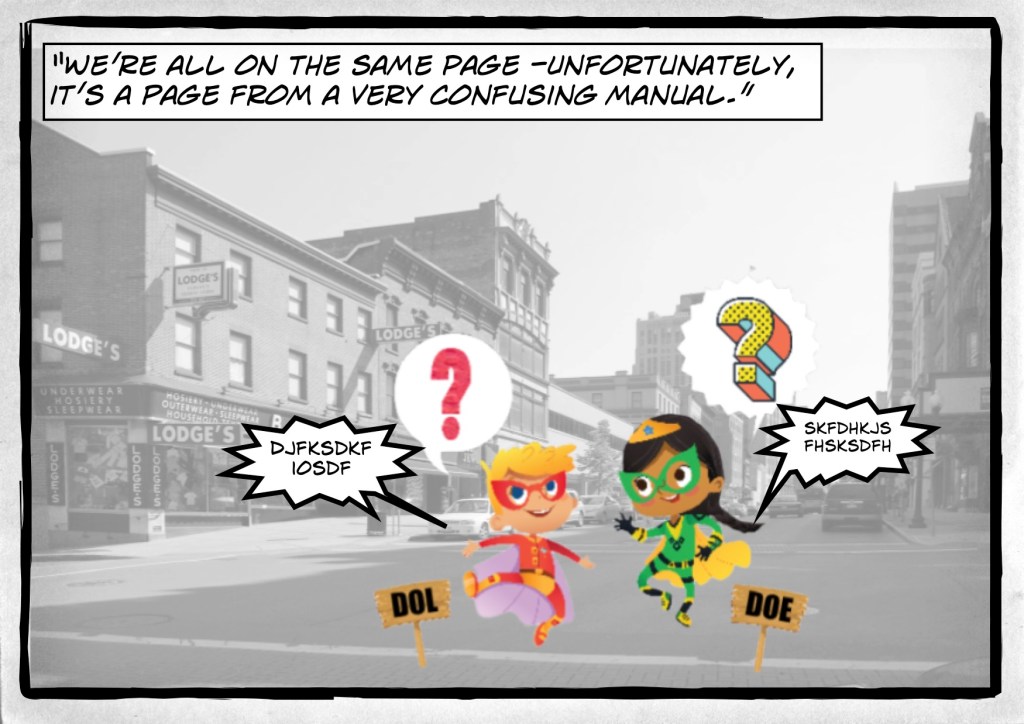
    Have you ever felt overwhelmed by jargon while trying to learn something new? I definitely did when I first entered into this work. The concept of using the age-old practice of apprenticeships to train educators is relatively new and involves collaboration between the Department of Labor (DOL) and the Department of Education (DOE). Since the U.S. apprenticeship system has primarily focused on trades like construction, it often feels like these agencies are speaking different languages when applied to the education profession. 

    But here’s the exciting part: these apprenticeship programs have tremendous value! They offer one to two years of on-the-job training and mentorship from experienced teachers, providing essential support as you navigate the classroom in real time and apply the college coursework with real students. Imagine having a guide to share insights and help you tackle challenges—it’s a game changer!

    Leveraging the expertise of both agencies (DOL and DOE), Educator Registered Apprenticeships have become a robust program that benefits teachers, school communities, and students alike.

    “To make learning the key terms associated with Educator Registered Apprenticeships more fun, we’ve created a crossword puzzle (with a word bank of key terms included!) to help you engage with and familiarize yourself with the basics.

    Lost in Translation Crossword Puzzle

    Instructions: Use the Educator Apprentice word bank and the clues provided to solve the crossword puzzle and become familiar with the key terms for Registered Educator Apprentices.

    Word Bank: Apprentice, Apprenticeship, Journey Worker, OJT, Sponsor, RAP, Teacher Residency Program, RI

  • Welcome to the Learning Curve! 🎉

    Beginners guide to Educator Registered Apprenticeships…

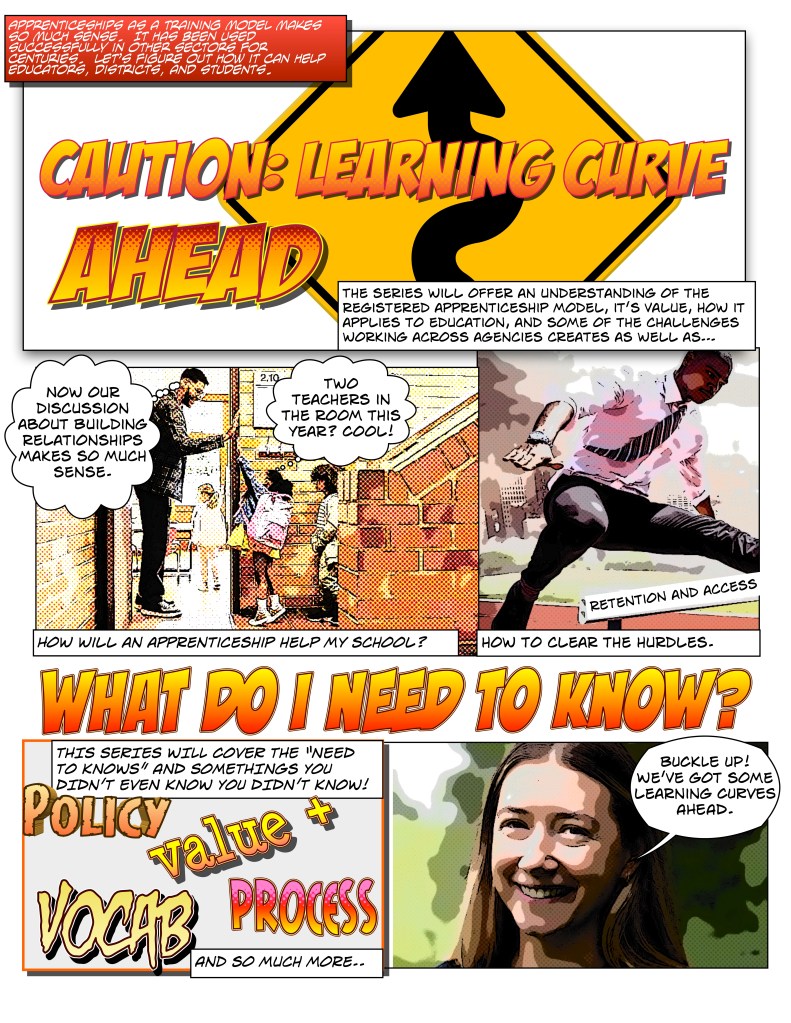
    If you’re here wondering what an Educator Registered Apprenticeship (ERA) is, you’re not alone—it’s a newer concept. Even with over a decade of experience in education, I found ERAs to be a bit tricky to grasp. Yet, I have to say, that makes them so exciting—they represent a fresh approach to teacher preparation, both in NYS and across the nation. 

    Imagine if teaching and a superhero training camp had a baby—that’s kind of what an educator apprenticeship is like. We’re here to unpack all the quirky details of educator apprenticeships and show you how they’re shaking up how teachers are prepared.

    With the educator workforce shortage on the rise as districts struggle to attract and retain teachers, Educator Apprenticeships have quickly gained traction nationwide, with 37 states and counting adopting new programs over the past two years. But how did we get here? What exactly is a Registered Educator Apprenticeship? How does it shake up traditional pathways to becoming a teacher? Are apprenticeships the key to greater access and equity into teaching? And what’s with all the acronyms?

    We’ll dive into these questions and more in our weekly blog series, “Learning Curve,” and we’d love for you to join us on this journey.

    So buckle up and subscribe—this is going to be one wild, educational ride!

  • And Now there are 3!

    An Apprenticeship Pathway to School Administrator?  Yes!!

    School Administrator (Building Leader) is the latest title approved by the New York State Department of Labor, completing a full educator apprenticeship career ladder from Teacher Assistant to Teacher to School Administrator

    There are many reasons school districts should jump on this Apprenticeship opportunity for new leaders: 

    1. More clinically robust pathway, solving problems of practice in the placement through the application of coursework and collaboration,
    2. Full-time employment in the leadership role for a full year, 
    3. Tuition support ($6,000) for SUNY SBL Certificate Programs,
    4. Broader access for a grow-your-own path or outside potential.

    As with previous titles, the School Administrator Apprenticeship brings research-proven value in educator preparation: new hire retention, accessibility and positive impacts on students and schools. Equally important are the financial resources for Registered Apprentices through SUNY Apprenticeship tuition assistance, and NYS Department of Labor Apprenticeship Expansion Grant monies which, when available, can offset private college/university tuition. 

    Technical assistance through the NYS Educator Workforce Development HUB (HUB) and NYS Dept of Labor is available to help Register a School Administrator Apprenticeship Program. The registration process is manageable and timely. Let’s talk about how the HUB can help develop a RAP for future school building leaders, teachers, or teacher assistants to meet your educator workforce challenges. 

  • Exemplars from the Field: Questar III GYO Program

    guest author: Dr. Gladys Cruz

    “Grow your own” programs are an increasingly important way to retain educators, particularly during staffing shortages.

    In 2022, Questar III BOCES and the School of Education at the University at Albany, SUNY, initiated a new partnership to support teaching assistants and career and technical education (CTE) professionals interested in advancing their careers or becoming certified teachers.

    The Foundations of Teaching and Learning (FTL) program has been a great success for the Questar III  BOCES and staff. To date, five courses have been offered, which the BOCES has supported at no cost to staff. This fall, the first FTL cohort of 16 participants will complete their sixth and final course.

    As part of the program, staff complete six college courses in two three-course series of stackable courses. The curriculum includes Introduction to Educational Psychology, Introduction to Human Exceptionality, Introduction to Curriculum and Instruction, Managing Classrooms and Behavior in the School Setting, Introduction to Assessment and Measurement, and Adolescent Literacy.

    Given the impact of this program, a second cohort was supported to develop and certify teachers and teaching assistants. Questar III is grateful to the teaching assistants and CTE teachers investing their time to improve their craft and further their professional growth – a key element of the organization’s framework for success.

    Listening to Voices from the Field:   a teaching assistant who became a cosmetology teacher and a trade professional working towards becoming a certified CTE teacher. Both using stackable coursework through the Questar III partnership with the University at Albany.

    This program was made possible by Questar III BOCES and AATLAS, School of Education, University at Albany.

  • The Moving Force of Change

    Unless you are a baby with a wet diaper, change doesn’t feel so good; especially when it is pushed, or worse yet, forced from the top down.

    Just ask any educator who lived through A Nation at Risk, No Child Left Behind, or Race to the Top. Let’s face it, most people like things just the way they are. “That’s the way we do things around here” is comfortable, settling, and so status quo; particularly following the terribly disruptive and deadly Covid-19 pandemic from which we have just emerged. Yup, status quo can seem like a warm and welcome friend; simply close your classroom or office door as “this too shall pass”.  That is until a seismic disruption, such as today’s teacher workforce crisis, upends everything.  

    The very best educators and school leaders know problems and crises, like the teacher workforce issue, rarely pop up without warning or go away on their own. Experience shows the most impactful solutions usually start at ground level with those dealing directly with the issue, and are the products of creativity, due diligence, strength and courage. Such systemic change efforts in education necessitate strong, trusting partnerships; major reforms such as redefining teacher preparation with residency programs require those across P-20. Residency programs have proven their muster in the field with increased student learning, greater teacher retention, and more workforce diversity.  Weaving together agencies like  the state education department and department of labor, to combine residencies with paid Apprenticeships boosts those positive outcomes manifold. 

    In New York, right now, the big challenge to combining and leveraging this pathway is finding higher ed partners with NY State Ed Dept-approved residency programs-districts can not offer highly affordable, paid residency experiences through Apprenticeships without such programs.  Of the 91 Educator Preparation Programs, only ten presently have successfully completed the process to register an NYSED-approved residency program. Most often the challenge is facing the element of change: asking faculty to shift their thinking about partnerships, program delivery, clinical experiences, and curriculum alignment, not to mention simply finding the time to complete NYSED paperwork.

    Districts and their higher ed partners want what’s best for students and communities, and the faculty and leaders that comprise the P-20 continuum are passionate, dedicated professionals who chose education to serve students and their communities.  These educators work in a system which regularly faces change, an omnipresent force that reflects the dynamic society we inhabit.  With that reality, educators might appreciate a few of Michael Fullan’s Change Forces:

    • “Change is a journey not a blueprint (Change is non-linear, loaded with uncertainty and excitement and sometimes perverse);
    • “Problems are our friends (Problems are inevitable and you can’t learn without them)”; and
    • “Every person is a change agent (Change is too important to leave to the experts, personal mindset and mastery is the ultimate protection)”.

    Change is complicated, hard, and messy. Yet, the innovations on the other side of the change process warrant, and deserve, the effort. 

    After all, who can argue with a few additional hands on deck in any classroom?  Who doesn’t want a more diverse, stable teacher workforce?  And who doesn’t want classroom-ready new teachers with the confidence and efficacy to remain in teaching because of their residency Apprenticeship experiences? We all want what is best for students , which is why change in teacher preparation can and will succeed.

    Fullan, M. (1993). Change forces: Probing the depth of educational reform. London: Falmer Press.

  • Avoiding the Vortex: the Impact of Preparedness on Retention

    We get it. These are dark times in education. The teacher workforce crisis has created a palpable sense of dread for school leaders, many of whom are scrambling to shore up faculty numbers.

    The pool of candidates is bone dry, and though certified teachers are strongly preferred, anyone with an associate’s or bachelor’s degree and a willingness to work with children will do. Filling vacancies has become a stop gap, mad dash measure to find and put adults in front of kids. Yet, sink or swim, what happens to most of those new hires?

    Unfortunately, research shows early-career teachers often don’t professionally survive as evidenced by attrition rates of up to 50% in the first five years. These high rates of staffing turnover result in a cycle of churn and discontinuity for districts. The swirling further erodes workforce stability, hurting school communities and straining financial resources with hiring and onboarding new teachers costing from $9,000 to $20,000 per position.  

    This whirlpool effect in conjunction with falling educator preparation program enrollments, declines in status of the profession, pandemic driven retirements, and low new teacher retention rates (as compared with residency based preparation) has contributed to the teacher shortage crisis. Unfortunately, filling classrooms with uncertified or poorly prepared teachers is likely to continue, possibly expanding the workforce vortex that unmercifully swallows its victims. It will take time to undo years of damage, but data from teacher preparation programs based on residencies reveal there is light at the end of the tunnel.

    Ample research shows residency programs work. A 2019/20 National Center for Teacher Residencies principal and teacher perception survey found residency graduates are rated more effective by principals than those in traditional programs. Residents are also highly valued by mentors with 93% feeling residents are prepared to be teachers of record. If residencies are the ray of light, Registered Apprenticeship Programs (RAPs) are a beacon, shining brightly to lead the way. 

    RAPs with their associated funds and historical precedence, complement residency programs by providing a funding model that: 

    • pays wages to teacher candidates, 
    • recognizes the important work experienced teachers do to guide those candidates, and
    • ensures sustainability while broadening accessibility to teaching.

    New York, and the nation, may be grappling with a serious teacher shortage, but the innovators and disruptors have shown there are solutions through residencies and RAPs. Solutions that, in the long run, will keep our schools afloat, and off the vortex bottom.  RAPs provide schools with classroom-ready, confident teachers who will remain in education much, much longer than those entering the profession without the requisite knowledge and skills for success. Indeed, brighter days and smoother sailing are ahead for those willing to put in the due diligence and Register Apprenticeship Programs.

  • “JOURNEYWORKER”, ONE WORD OR TWO?

    When was the last time you heard the term “Journeyworker”, or for that matter, “Apprentice”, in conversation?

    Likely never if you work in the field of education where the more familiar terms for teacher pathways are “student teaching”, “cooperating teacher”, “field experience”, “state certification” and “tenure”–usually, in that order. Yet the trades and technical fields use the terms “journeyworker” and “apprentice” ubiquitously to define the important and highly esteemed multi-yeared progression from unskilled novice to expert, qualified worker. It is a required rite of passage Apprentices take to earn the qualifications/certifications commensurate with high level work and well paying titles. My appreciation for the Apprenticeship model, starkly different from traditional teacher preparation, increased over a recent breakfast conversation with a newly-retired friend and tradesman.

    Catching up over our second cup of coffee, the discussion turned to my current work around registering Apprenticeship programs for educators. My friend leaned in when I asked, “Dave, you’re familiar with the terms, Journeyworker and Apprentice, right?” With passion, Dave said, “Steve. That’s part of my job. I am a journeyworker, and I’ve guided Apprentices for decades. There is no better training model”.  I reciprocated this passion as I described the important and exciting work of the HUB team (of which I am a member). Our goal is to transform teacher preparation and the teaching profession into one that places a new and high value on the guided hands-on experience and application of college coursework in partnership with an experienced and successful teacher. A journey that lasts one or two full school years, immersing the candidate Apprentice in the school community and providing, through extended  time, the 360 degree view of teaching necessary for long term success.

    Back to crosswords, I often run across an unfamiliar word or two in puzzles that I really should know. Journeyworker is one such term. Call it a gap in knowledge, but up until working with the NYS Educator Workforce Development Hub, I didn’t fully realize the value Apprenticeships could offer the field of education. Under the Registered Apprenticeship Program model, and for the first time, the value of the experienced teacher (Journeyworker) working shoulder to shoulder with a teacher candidate (Apprentice) all day, every day across the school year is finally recognized. Apprenticeships are a centuries old model, so I am puzzled, what’s taken us so long? Journeyworker is one word, and it fits!

  • Waving a Magic Wand: the Alchemy of Funding

    At the Spring 2023 US Dept of Labor Eastern Seaboard Apprenticeship Conference, the question was asked, “if you could wave a magic wand and fix or add anything to the residency Apprenticeship model, what would it be?”

    Great question. 

    My mind immediately reflected on the legendary Ron Thorpe, late President and CEO of the National Board for Professional Teaching Standards who wrote, Sustaining the Teaching Profession. Dr. Thorpe’s seminal paper highlighted the important parallels to the successful medical residency model, about which he commented, “Since that time [WW II], most physicians move into residencies,…..These are intense phases of training during which new physicians see the breadth and depth of situations presented by patients. It is a time when the knowledge and skills learned in medical school become anchored in practice, but under the close supervision of experienced physicians (…) The medical profession has developed in (…) ways that can inform the development of the teaching profession ” [emphasis added].

    We all know (and are relieved) that medical students spend several years applying their academic learning as residents in hospital settings under the guidance of Attending Doctors. The resident’s work is long and hard, but wages are provided which allows residents to focus on their studies and skills, rather than the financial costs of their career pathway. Medical residents are paid without question. 

    Here’s the best part: Do you know who covers their cost of employment?  

    Another great question. Hint: It’s not the hospitals. 

    Residents are paid through U.S. taxpayer dollars as the cost was long ago embedded in the federal government healthcare arm, Medicare and Medicaid. And why should taxpayers via Medicare and Medicaid assume this fiscal responsibility? Because health care and well-trained doctors matters; a lot! And we can say the same about education and teachers, whose impact grows each and everyday!  

    Now, back to that magic wand. With newfound powers, we’d leverage a teacher preparation model (residencies) that follows the medical residency pathway and embeds the funding in a broad-based federal model. This would allow teacher candidates to be paid a live-able wage in residencies as Apprentices, while applying academic coursework over at least one full academic year in the workplace; all under the watchful eye of accomplished practitioners. Surely our children deserve a teacher preparation model that promises to produce the best new educators this great country can provide; educators who will contribute to a sustained, competent, skilled teacher workforce. It will take a lot of conversations and work.  “Abracadabra”, let’s begin!