It's a Rap

creating partnerships to develop a dynamic, robust, well-prepared educator workforce


  • From Celebration to Sustained Support: Honoring Educators Beyond One Week

    Across New York State last week, classrooms were filled with celebrations: bulletin boards covered in kind words, carts of snacks making their rounds, surprise coffee deliveries, catered lunches and heartfelt notes from students and families. It’s a beautiful moment and one that’s well deserved.

    But it also raises an important question: why just once a year ?

    Teachers change lives every day. Teaching isn’t just a job. It’s a daily act of service, leadership, care, creativity, and resilience. Educators do so much more than deliver lessons they build relationships, nurture student identity and confidence, and lay the foundation for our future workforce. Their impact stretches far beyond their classroom ‘home’, into the communities they serve.

    So while Teacher Appreciation Week is a meaningful time to pause and say ‘thank you, we appreciate you’, we have to ask ourselves: how are we valuing teachers the rest of the year?

    How we support and uplift educators on a daily basis doesn’t just affect teacher morale. It shapes student success, influences school culture, and determines the sustainability of the profession itself.

    And the data backs it up

    The Learning Policy Institute (LPI) has found that access to well-prepared, experienced teachers is one of the strongest predictors of student achievement. In under-resourced schools, the difference is even more stark. LPI notes that students in these schools are more likely to have novice, underprepared teachers, which exacerbates opportunity gaps.

    LPI’s researchalong with others, consistently shows that positive school climates where teachers feel valued, have autonomy, and collaborate—are strongly linked to teacher retention.

    Some key takeaways:

    • Over 90% of teacher demand is due to attrition, not new positions. The most common reasons: lack of support and dissatisfaction with working conditions.
    • High-retention pathways, like teacher residencies, increase retention by as much as threefold in high-need districts.
    • Schools that build collaborative cultures and invest in growth see lower turnover and higher student outcomes.

    So, what if we treated Teacher Appreciation Week as the kickoff not the full event?

    That might mean we need to:

    • Invest in teacher apprenticeships that provide mentorship, financial support, and deep clinical preparation, all things linked to greater teacher retention and teacher satisfaction. 
    • Allow entry level educators to begin their career with little or no debt. 
    • Connect degree coursework leading to certification to immersive experience and opportunities to apply that learning.
    • Ensure union leadership and individual practitioners’ voices are included in school and district decision-making discussions.
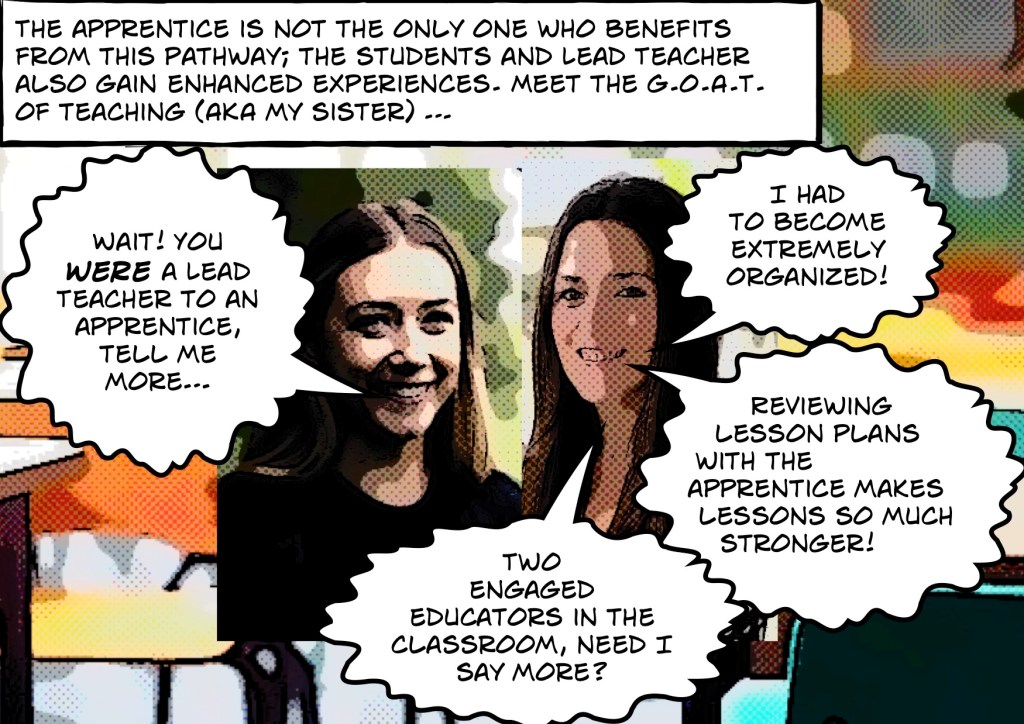
    • Create opportunities for career growth through professional learning and teacher leadership without leaving the classroom–such as guiding apprentices.

    Let’s Celebrate and Then Keep GoingSo yes let’s keep the thank-you notes and morning shoutouts coming. Let’s decorate the lounges and celebrate with cake. But let’s also use this week to ask some deeper questions and reflect on our path forward.

  • Educators Always Knew—The Rest of Us Are Just Catching Up: The Importance of Meeting Future Educators’ Needs as We Build the Pipeline

    Over the weekend, I was sitting with a few friends who are current educators. As someone who has worked in education for the last decade but not as a classroom teacher something clicked for me.

    In talking about their experiences, I realized what teachers have known all along: the best way to support learning is to meet students where they are. It seems kind of obvious right? 

    It’s such a simple idea, yet profoundly powerful. And it doesn’t just apply to K–12 students it has much further reaching implications, like  how we prepare future educators, too. 

    This “aha” feels especially urgent now, as we witness the thinking around the ways we prepare future educators start to shift. There’s growing momentum behind immersive programs like residencies and apprenticeships as sustainable, high-quality ways to staff our future classrooms. These models recognize that all learners, including aspiring educators, have different needs–whether they’re career changers, high school students, aspiring leaders or teacher assistants. Programs must reflect the complexity (from flexible entry points, to needing an income, or wraparound services) and meet candidates where they are, offering them what they need.

    Take New York City, for example. As the city takes steps to implement the  class size law capping classes at 20 students in kindergarten through third grade, 23 in grades 4–8, and 25 in high school the mayor has committed additional funding to support this effort. It’s estimated that this investment could fund the hiring of up to 3,700 new teachers. This presents a tremendous opportunity but it also raises a critical question: how will we prepare, support, and sustain this next wave of educators, especially as the city is faced with numerous vacancies and a persistent challenge with teacher recruitment and retention?

    Apprenticeship pathways could be part of the solution. For teachers these models are typically built on residency programs and offer paid, mentored, on-the-job experiences aligned with related instruction creating multiple, accessible entry points into the teaching profession. By expanding how people can enter the field, we expand who is able to pursue it.

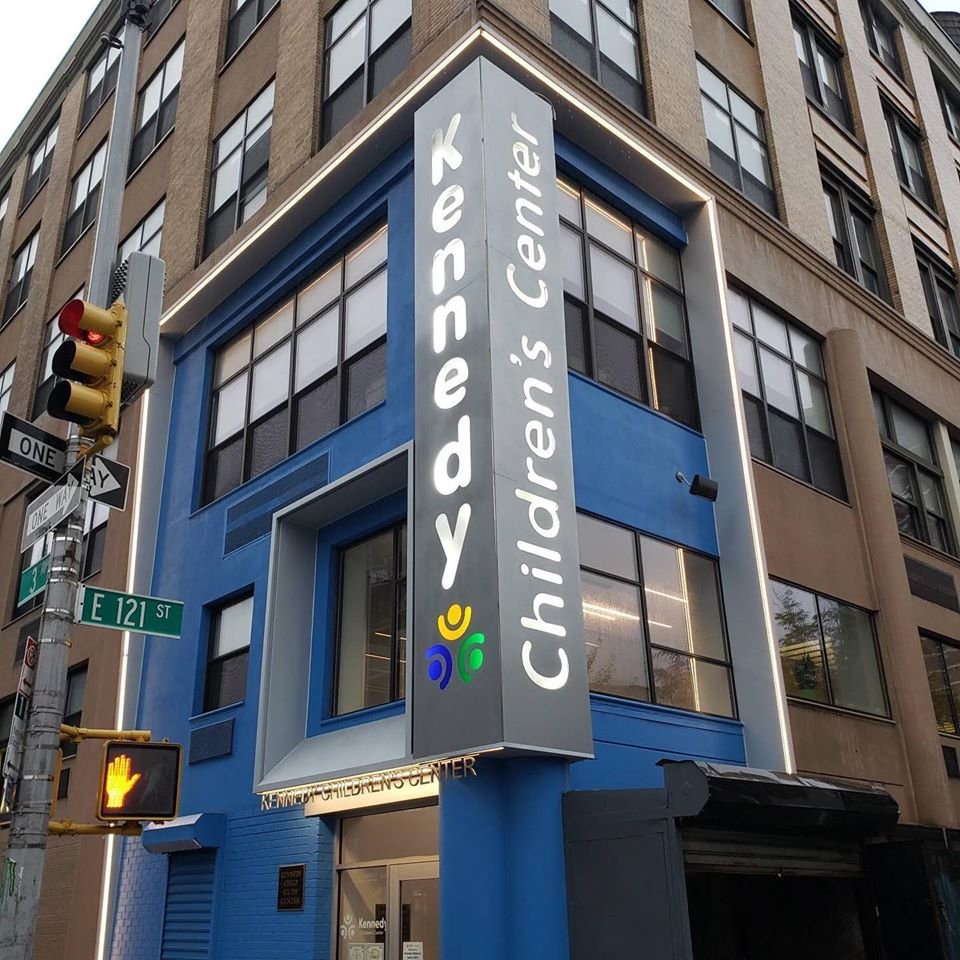
    Carolyn Cleaveland, COO of Kennedy Children’s Center (KCC), captured this perfectly when speaking about their early childhood apprenticeship program:
    “It’s not a shortage of people—it’s a shortage of opportunity.”

    At KCC, they are fully staffed and there’s a waiting list of community members eager to become educators through their program. Fully staffed? A waiting list? for an early childhood program that’s almost unheard of. And it’s a powerful proof point of what’s possible when we remove systemic barriers and build pathways that reflect the lived realities of future educators.

    Registered Apprenticeships in New York State are doing just that: opening doors to a broader pool of future educators by meeting people where they are and embedding career pathways that lead to lasting success.

    But how exactly do these programs expand access to the profession?
    By creating multiple, flexible entry points tailored to the realities of aspiring educators, apprenticeships tap into talent that traditional pathways do not accommodate for;

    • Teaching Assistants to Teachers: Current TAs and paraprofessionals can work, in some new residency programs, toward teaching certification through paid, mentored experiences that align with their instructional responsibilities, advancing without stepping away from the classroom.
    • Career Changers: Individuals from other industries bring valuable skills and lived experience. Apprenticeships offer a pathway into teaching without requiring them to leave the workforce to return to school full-time.
    • Substitute Teachers: Already in schools and familiar with classroom dynamics, substitutes can enter into apprenticeships working alongside an experienced teacher offering a  paid, structured, supported pathway to initial certification.
    • Parents, Community Members, and/or Volunteers: Local residents deeply invested in the community, bring care, context, and commitment, making them strong candidates for supported entry through apprenticeships into the profession. They can grow into educator roles (such as teacher assistants or teachers) being supported by the school community, strengthening community-connected teaching. 
    • High School Students: Through CTE or CTE-like pathways, students can begin a career in education early, starting a teacher assistant apprenticeship and moving into a full time paid TA roles after graduation. This two year program will allow them to progress steadily in a paid position while taking coursework.  And this is just the start.  For those interested, they could build on this experience and continue by pursuing a teacher apprenticeship.
    • Teachers to Leaders: experienced teachers interested in expanding their role within the school community could develop in leadership through an apprenticeship also. School administrators, like all educators, benefit from a paid, fully immersive program which allows them to apply their academic learning.

    Each of these entry points broadens the pipeline into the profession, and helps meet the urgent demand for educators. This is more than a workforce strategy. It’s a commitment to sustainability, and the future of our schools.

  • Pioneering the Future: Harpursville Blazes the Way with NYS School Administrator Apprenticeship

    Across the country, the call for dynamic, well-prepared school leadership is growing louder and New York is stepping up in a big way. Leading this charge is Harpursville Central School District, the first in New York State to launch a Registered Apprenticeship Program (RAP) for school administrators. This groundbreaking initiative is helping redefine how we develop the next generation of principals and educational leaders.

    “We’ve found this model to be incredibly effective,” says Harpursville’s superintendent, Heath Georgia. “As our program progresses, I highly recommend it to districts looking to capture someone already on staff with leadership qualities and help move them forward.”

    Superintendent Georgia goes on to highlight the experience of Brian, the district’s current School Building Leader apprentice. “The depth and breadth of what Brian is doing far exceeds that of others in traditional coursework. He’s fully embedded, experiencing leadership in real time, discussing it daily with our administrative team, and applying what he’s learning immediately. That kind of immersion is powerful.”  

    Another advantage is Brian as a long time teacher in the district, maintains a connection to instruction and the classroom that deeply informs his leadership style. Harpursvile’s High School Principal Mrs.Kristine Conrow, “From day one, we had someone who already knew our students, our systems, and our community. Unlike my own part-time internship, this full-time role allowed him to be truly present, engaged, and a real part of the administrative team.”

    Harpursville’s leadership isn’t occurring in a vacuum, it’s part of a growing national trend. North Dakota led the nation, creating the first school administrator apprenticeship pathway that blends rigorous academic preparation with hands-on, job-embedded leadership experience. This program, NY’s and other states investing in this model are gaining traction because they meet districts’ urgent need for effective school leaders while offering a more accessible, practical route to certification.

    The Harpursville Registered Apprenticeship program coordinates the requirements for NYS  Initial Administrative certification with the extended paid, on-the-job training requirements of an apprenticeship which align with the district’s workforce priorities. This coordination across state agencies ensures that apprentices graduate with real-world experience and credentials that open access to career advancement. During our conversation, Mr. Young expressed his gratitude to the district for investing in the program, noting that it has significantly eased the path toward earning a school administrator credential.

    This is very different from the traditional approach. In NYS, typical traditional administrator preparation relies on a 450 hour internship requirement which is often achieved through planning periods, after school or some summer work and without additional pay. So what makes this approach different? In short: it’s fully embedded. Apprentices don’t just study school leadership, they live it. From day one, for a full year, they’re part of the district’s administrative team, learning alongside seasoned principals, leadership staff, and superintendents. This is more than professional development, it’s workforce development.

  • Expanding Opportunities: The Growth of Apprenticeships for Educators in New York State

    The expansion of Registered Apprenticeship Programs for Educators (RAPS) in New York isn’t just about building a robust, highly skilled teacher workforce, it’s transforming lives. As we spoke with apprentices and stakeholders across the state, we heard powerful stories of growth, opportunity, and resilience. Seeing firsthand how these programs are transforming not just careers, but entire communities. Apprentices aren’t just earning certifications, they’re fulfilling dreams, inspiring future generations, and proving that with the right support and opportunity, every individual with a passion for building a career in education can succeed.

    Did you know that New York State was the first in the nation to register an apprenticeship under the title of “Teacher”? In 2021, the New York State Department of Labor (NYSDOL) officially recognized “Teacher” as an apprenticeship occupation, paving the way for the creation of Registered Apprenticeship Programs (RAPs) in education. In just four years, RAPs for educators have expanded at an unprecedented pace and are now available in more than 45 states, plus the District of Columbia and Puerto Rico. These programs follow an earn-and-learn model designed to tackle educator shortages while providing multiple, accessible entry points into the profession. They create pathways for paraprofessionals and school staff to grow while also supporting high school and college students, career changers, community members and substitute teachers seeking career advancement.

    In New York, this movement is gaining traction, establishing a strong foundation for Educator RAPs. The NYS Education Workforce Development Hub (the HUB) has been a driving force in this expansion.  Key advancements include providing technical assistance to foster a shared understanding of the model among stakeholders, expanding NYSED-approved residency programs, the backbone of the teacher apprenticeship title in NYS public schools, expanding from just 5 programs in 2021 to 39 statewide today and  growing Registered Apprenticeship Programs for educators across the state. This support has helped expand RAPs to more than 15 active programs across urban, suburban, and rural communities, with over 50 registered educator apprentices actively gaining hands-on classroom experience while earning their NYS certification. Twenty additional programs are currently in development throughout the state.

    Yet, the road to widespread adoption wasn’t without challenges. When the first registered apprenticeship program for educators (Classroom Academy) was approved, it was  expected to take off like wildfire. That wasn’t the case. What we didn’t anticipate was the sea change required to shift mindsets around educator  preparation and introduce this innovative model to districts, higher education partners, and other key stakeholders. Adoption required time, awareness-building, advocacy, and a fundamental rethinking of educator preparation as workforce development, shifting how we develop and certify those serving in classrooms.

    No matter the setting whether a large urban district or a small private school, every education agency can leverage this gold standard of workforce development to strengthen and diversify their educator pipeline. Ready to take the next step? Reach out, we’d love to help!

  • Addressing the Rural Teacher Shortage: The Power of Registered Apprenticeships for Educators

    Talk to any rural school leader in New York State, and a common challenge quickly emerges, finding and keeping great teachers and administrators is harder than ever. Limited housing options, lower salaries compared to urban and suburban regions, and fewer professional development opportunities make it difficult for educators to stay, even when they want to. Shrinking local workforces and declining student enrollment exacerbate the workforce problem

    The status quo is unsustainable. Without action, rural districts struggle with recruitment and lost talent to higher-paying areas will continue. So how can a program like Registered Apprenticeship Programs for Educators (RAPs) help? Let’s take a deeper look… 

    Teachers are more likely to stay in or near their hometowns, making locally focused recruitment strategies a powerful tool for addressing staffing shortages in rural areas. In our neighboring state of Vermont, where nearly two-thirds of residents live in rural communities, the NEK Next Gen Teacher initiative is putting this concept into action. By partnering with high schools and career centers, the program introduces students to educator careers early, creating a sustainable pipeline of educators who are already deeply connected to their communities.

    Much like Kennedy Children’s Center, Vermont has integrated its Grow Your Own (GYO) program within a RAP which is creating pipelines for paraprofessionals, substitute teachers, and community members to become certified teachers without leaving their communities. RAPs could be the lifeline rural schools need, providing real opportunities for people already invested in their communities to become educators without uprooting their lives. Growing up in a rural district in upstate New York, I know firsthand that schools are the heart of these communities, making educators the beating pulse. These educators are also neighbors, parents, coaches, and taxpayers  which help the community thrive.

    The challenges facing rural schools in New York State aren’t new, but the solutions need to be. Programs like Registered Apprenticeships for Educators provide a promising pathway to recruit, train, and retain talented educators who are already invested in their communities.

    With the NYS EWD HUB and the Rural Schools Association of New York State working together to champion this effort, now is the time for rural schools to explore how RAPs can transform their hiring and retention strategies. Investing in homegrown educators isn’t just a stopgap, it’s a long-term solution to ensure that rural schools, and the communities they anchor, continue to thrive.

    Rural schools are just now facing the brunt of the hiring challenges that affect most school districts, but which are greatly exacerbated in rural areas (given their historic inability to pay salaries competitive with suburban and even urban districts, as well as the lack of affordable rural housing for those beginning their careers.) 

    Apprenticeship programs offer the opportunity to develop relationships with prospective staff, provide greater familiarity and hopefully affinity for rural schools and offer the kind of financial platform that allows individuals to literally work into a career in rural districts.  The Rural Schools Association of New York State fully supports these initiatives.

     David A Little, Esq, Executive Director for the Rural Schools Association of NY.

  • At What Cost? Unlocking the ROI of Registered Apprenticeships for Educators

    Some recent feedback we received during a workshop stuck with me: “You need to SELL this harder and really drive home ROI.” And honestly, I can’t stop thinking about it. It’s made me rethink how we frame the conversations we’re having with key stakeholders. While we’ve always focused on the long-term value that Registered Apprenticeship Programs for educators bring to education systems, maybe it’s time to really lean into the financial realities and push harder for investment in a way that’s just as urgent as it is logical.

    After all, the need for solutions is so clear with just teacher turnover costing us millions of local NYS dollars each year. The Learning Policy Institute has found that teacher attrition costs U.S. public schools $8 billion annually (with nearly 50% of educators bailing within the first five years) and each teacher lost can cost anywhere from $12,000 to $25,000 to replace for the district. That’s a staggering amount of money, and it’s not just a one-time expense, it’s an ongoing drain on school budgets. We can’t afford to keep ignoring the opportunity to make a real, lasting impact. So the question is: Can we afford not to invest in a better solution?

    What we also know is that two things can seriously reduce teacher turnover: more immersive  preparation and building stronger support networks for new teacher. And guess what? Educator RAP checks both those boxes! RAPs for teachers can also fall under a BOCES Contract for Shared Services for component school districts and all RAPs for educator titles (teacher assistant, teacher, and school administrator) can further address costs through the SUNY Apprenticeship fund (for apprentices enrolled in a SUNY program) and HUB one-time start up funding. You can check out your district’s numbers using the ROI calculator.

    Understanding the ROI Calculator for Registered Apprenticeships for Educators – Watch a quick video on how it works

    And let’s not forget, the ROI of RAPs isn’t just financial! The impact goes far beyond cost savings. When schools retain their workforces, the benefits ripple through the community in powerful ways. Long-term educators build strong relationships with students, parents, and local organizations. They bring stability to classrooms, create continuity in student learning, and foster trust and connection strengthening the entire school culture. So, here’s the bottom line: Registered Apprenticeship Programs for educators should be practically selling themselves and in many ways, they already are. Across the country, policymakers, government officials, and local partners are recognizing the long-term ROI these programs deliver. At the HUB, we’re not backing down from presenting the hard numbers, because we know the impact is undeniable. 

  • Educator Registered Apprenticeships and Grow Your Own: How Kennedy Children’s Center is Transforming Educator Preparation

    At the heart of the Kennedy Children’s Center (KCC) lies a deep commitment to community—a commitment that has deeply resonated with me as I continue my journey of learning about innovative, community-centered educational programs and the current challenges faced by educators. Their leadership refused to accept traditional recruitment and training methods that failed to meet the needs of their students and staff. Years before registered apprenticeships for educators were formally recognized, the KCC “Grow Your Own” (GYO) program was born. It is more than just a solution to the teacher shortage; it’s a model for how schools can provide essential support, expand access, and create growth pathways for their staff. As one of New York City’s first and largest early childhood special education providers, KCC faces immense challenges, serving over 400 children daily with a dedicated team of 240 staff.

    During my conversation with Executive Director Jeanne Alter and KCC’s Chief Operating Officer Carolyn Cleveland, it became clear just how personal and transformative the GYO program is for everyone involved. By reimagining recruitment as a workforce initiative, the program addresses barriers like certification and training while equipping aspiring educators with practical skills through a six-week “bootcamp.” Hearing Jeanne describe the shift from hiring people on a Monday and placing them in classrooms on Wednesday made me reflect on how impactful quality preparation truly is. “We can’t just keep hiring people and watching them leave,” Jeanne shared. “We needed to invest in their training, their confidence, and their ability to thrive in our classrooms.” Carolyn echoed this sentiment, adding, “It’s not just about filling jobs—it’s about creating pathways for growth and opportunity.”

    At this point in the conversation, I was inspired. I couldn’t help but think: Who wouldn’t want to be part of a program where leadership truly understands what it takes to be successful and actively invests in their candidates’ success?

    “We needed to invest in their training, their confidence, and their ability to thrive in our classrooms.”

    Jeanne Alter, Executive Director, Kennedy Children’s Center

    Their decision to register the GYO as an educator apprenticeship with the Department of Labor, solidifies the commitment to providing candidates with structured pathways for long-term success, ensuring these educators are not only prepared for the classroom but also have the support and recognition they need to grow their careers. Program participants are earning while they learn, and are fully supported through mentorship at the school, becoming more and more engaged in the school community through hands-on work with students, in classrooms everyday.

    “It’s not just about filling jobs—it’s about creating pathways for growth and opportunity.”

    Carolyn Cleveland, Chief Operating Officer, Kennedy Children’s Center

    What struck me most was the ripple effect of GYO, and now the apprenticeship—not just on staffing but on the lives it touches. This evolving model of workforce development has helped KCC maintain 100% staffing in a sector plagued by vacancies, and over 350 educators have been trained, with many now pursuing advanced degrees. Through their innovative thinking, KCC has built not just a pipeline for educators but a thriving community where teachers and students alike can flourish. Now, as a registered apprenticeship program, KCC has ensured that the GYO model will not only sustain but grow, supporting educators and uplifting communities. It’s a reminder that even in the face of systemic challenges, meaningful change is not just possible—it’s already happening.

    Want to know more? Stay tuned for a special blog post highlighting the candidate’s experience in the GYO/Registered Apprenticeship program!

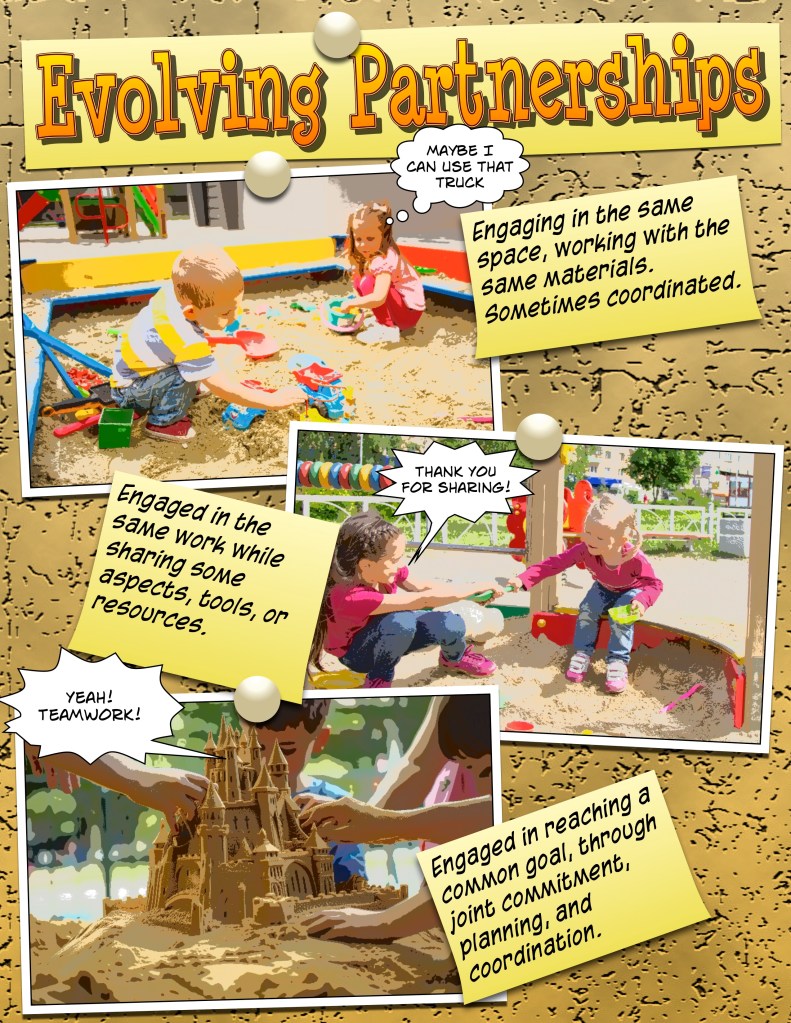
  • The Evolution of Partnerships: Building the Educator Workforce Through Collaboration

    Registered Educator Apprenticeships without strong partnerships are like a car with flat tires — you might move, but it’s going to be a bumpy ride! It’s the partnership conversations that keep things rolling smoothly and preparing future educators to get behind the wheel. What’s most exciting is how these collaborations break down barriers, build bridges, and dismantle the silos, creating a district-led approach that fully supports both aspiring teachers and the communities they serve.

    So, who are the key players that make Registered Apprenticeship Programs (RAPs) for educators actually work? You already know the Department of Labor and the Department of Education as they create the framework, but the real magic happens through a team on the ground. These folks don’t just check boxes—their conversations develop, implement, and maintain the program to make sure it’s effective, supportive, and truly beneficial for everyone involved. Let’s meet the core players who keep RAPs running smoothly:

    1. Local Education Agency (LEA)

    The LEA, usually the local BOCES, school district, private or charter school, is where apprentices will actually do their on-the-job training. They are the “employer” and typically the sponsor of the program. Think of it as the real-world classroom where future educators practice their craft. LEAs have a major investment in how the program runs. They know what their schools need, how training can align with their priorities, and collaborate on where apprentices should be placed. As the employer and (potentially) sponsor their voice is amplified and allows them to target the talent pipeline they need.

    2. Unions 

    Unions are invested in this work and sometimes act as joint sponsors.  These are the future teachers, their future constituency.  In NYS all public schools and some charters or privates are collectively bargained and have union involvement.  In RAPs, unlike other programs, unions can negotiate a stipend for the experienced educator working with the apprentice which honors the work and investment of time in guidance, modeling and coaching.  They may even represent the Apprentice, negotiating compensation, benefits, and working conditions. The experienced educator, the union member, working with the apprentices will also make sure apprentices aren’t overwhelmed juggling coursework and hands-on teaching. Think of them as a critical part of the support system that ensures apprentices are not only learning but also thriving in their learning and work environment.

    3.  Institution of Higher Education (IHE)

    Colleges and universities come in as the academic partner, providing some or all the coursework, which in DOL terms is known as related instruction (RI).  This is the instruction apprentices need to meet certification requirements. But this isn’t just about ticking off classes. The IHEs are working with the LEA to meet their priorities, integrate the apprentice’s learning into the experience, and offer apprentices degree credits that contribute toward NYS certification—building qualifications that can further their career path. One of the coolest things about the RAP model is how it changes the traditional relationship between these players and it is continually evolving.  We will continue to explore this evolution as it builds shared ownership and why that is beneficial for everyone! So stay tuned!

  • A Closer Look at Educator Apprenticeships and Traditional Student Teaching

    Because Preparation Matters!

    Let’s be real: teacher prep matters—now more than ever. With enrollment in teacher prep programs at an all-time low and teacher shortages hitting schools hard, I have come to realize the traditional student teaching model, where aspiring educators spend only a few months unpaid in classrooms, isn’t meeting the needs of the field. It often excludes those who can’t afford to go without income, severely limiting access to the profession.

    On the other hand, I’ve learned a lot about the options. Registered Apprenticeships for educators offer a living wage and a much more immersive experience. Apprentices spend significantly more time in the classroom than traditional candidates— at least a full year and often two years —working side by side with experienced  teachers while completing their degree based coursework. Putting their learning into action in real time while earning a guaranteed wage makes the pathway more sustainable.

    We should acknowledge that many amazing teachers (shout out Mr.K) came through the traditional student teaching pathway. I am sure you know a few. And many of those trained in that model, describe their first year in the classroom as “baptism by fire” which is most likely why research shows between 40% and 50% of new teachers will leave teaching within the first five years.

    That said, these programs can be tough to access for many aspiring educators. Furthermore, research shows on-the- job training aligned with related coursework sets up educators for long term success in the classroom! 

    Hey, don’t just take it from us. Watch as actual educator apprentices (or listen to higher education faculty) reflect on the value of this type of programming.

  • Lost in Translation

    Finding a Common Language in Registered Apprenticeship for Educators

    Have you ever felt overwhelmed by jargon while trying to learn something new? I definitely did when I first entered into this work. The concept of using the age-old practice of apprenticeships to train educators is relatively new and involves collaboration between the Department of Labor (DOL) and the Department of Education (DOE). Since the U.S. apprenticeship system has primarily focused on trades like construction, it often feels like these agencies are speaking different languages when applied to the education profession. 

    But here’s the exciting part: these apprenticeship programs have tremendous value! They offer one to two years of on-the-job training and mentorship from experienced teachers, providing essential support as you navigate the classroom in real time and apply the college coursework with real students. Imagine having a guide to share insights and help you tackle challenges—it’s a game changer!

    Leveraging the expertise of both agencies (DOL and DOE), Educator Registered Apprenticeships have become a robust program that benefits teachers, school communities, and students alike.

    “To make learning the key terms associated with Educator Registered Apprenticeships more fun, we’ve created a crossword puzzle (with a word bank of key terms included!) to help you engage with and familiarize yourself with the basics.

    Lost in Translation Crossword Puzzle

    Instructions: Use the Educator Apprentice word bank and the clues provided to solve the crossword puzzle and become familiar with the key terms for Registered Educator Apprentices.

    Word Bank: Apprentice, Apprenticeship, Journey Worker, OJT, Sponsor, RAP, Teacher Residency Program, RI